What to Expect in a CPR Renewal Course
TLDR;
CPR renewal courses are fast, hands-on, and focused on refreshing life-saving skills. Expect skills practice, updated AHA guidelines, and same-day certification—often with flexible HeartCode options.
If it’s been close to two years since your last CPR class, it’s time to renew your certification. Whether you’re a healthcare professional or someone who wants to stay prepared, a CPR renewal course is designed to refresh your skills efficiently and reinforce confidence in real emergencies.
Here’s what you can expect when you renew your CPR certification.
1. A Focused Refresher on Core Skills
Renewal courses begin with a brief review of essential techniques, including high-quality chest compressions, AED use, and proper response steps for sudden cardiac arrest.
Healthcare professionals typically renew through
Basic Life Support (BLS) Renewal
Community members, teachers, and workplace teams often choose
Heartsaver CPR & AED
The goal is not to start from scratch, but to quickly reinforce best practices you already know.
2. Hands-On Practice With Instructor Feedback
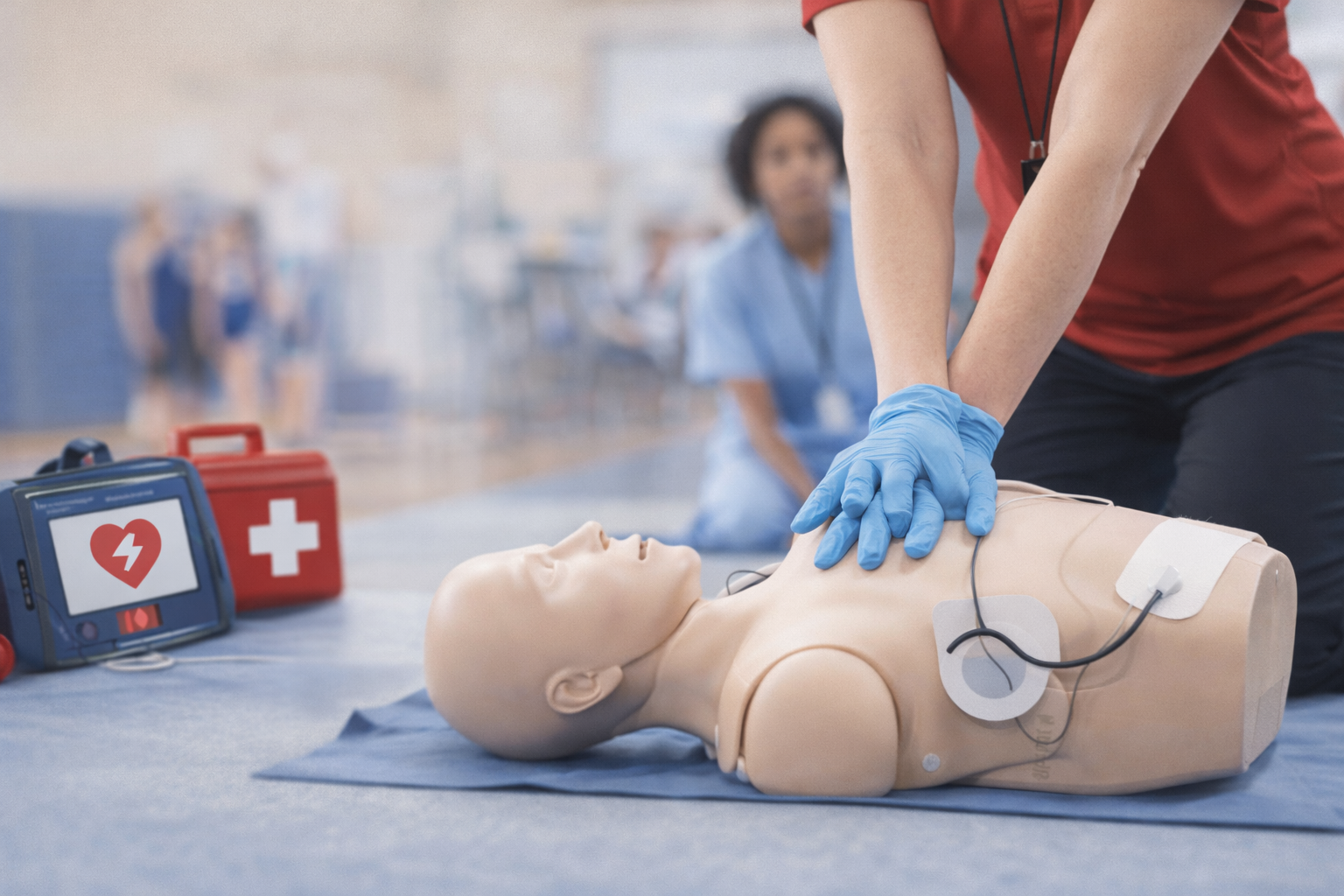
Most of your renewal course is spent practicing, not sitting through lectures. Instructors provide real-time coaching on compression depth, rate, hand placement, and AED use.
You’ll also practice working with others during simulated emergencies. This team-based approach mirrors what providers experience in advanced courses like Advanced Cardiac Life Support (ACLS) and Pediatric Advanced Life Support (PALS)
3. HeartCode Blended Learning Options
For busy schedules, many renewal courses are available through HeartCode blended learning. This format allows you to complete the online portion at home, then schedule a short, in-person skills evaluation.
Learn more about online and blended options here:
CPR & First Aid E-Learning Courses
HeartCode is especially popular for healthcare professionals and large organizations managing multiple renewals.
4. Updated AHA Science and Guidelines
CPR guidelines evolve as research improves. Renewal courses ensure you’re up to date on the latest American Heart Association recommendations, including compression ratios, AED advancements, and age-specific care for adults, children, and infants.
Staying current helps ensure your response aligns with today’s best practices, not outdated techniques.
5. Same-Day Certification
Once you successfully complete your skills evaluation, you’ll receive a digital certification card the same day, valid for two years. This makes it easy to stay compliant with employer, school, or licensing requirements.
Next Steps
Ready to renew and stay prepared?
Book your BLS, ACLS, PALS, or Heartsaver CPR renewal today.
You can also find a convenient training center near you.
Frequently Asked Questions