Top 5 Myths About CPR
TLDR;
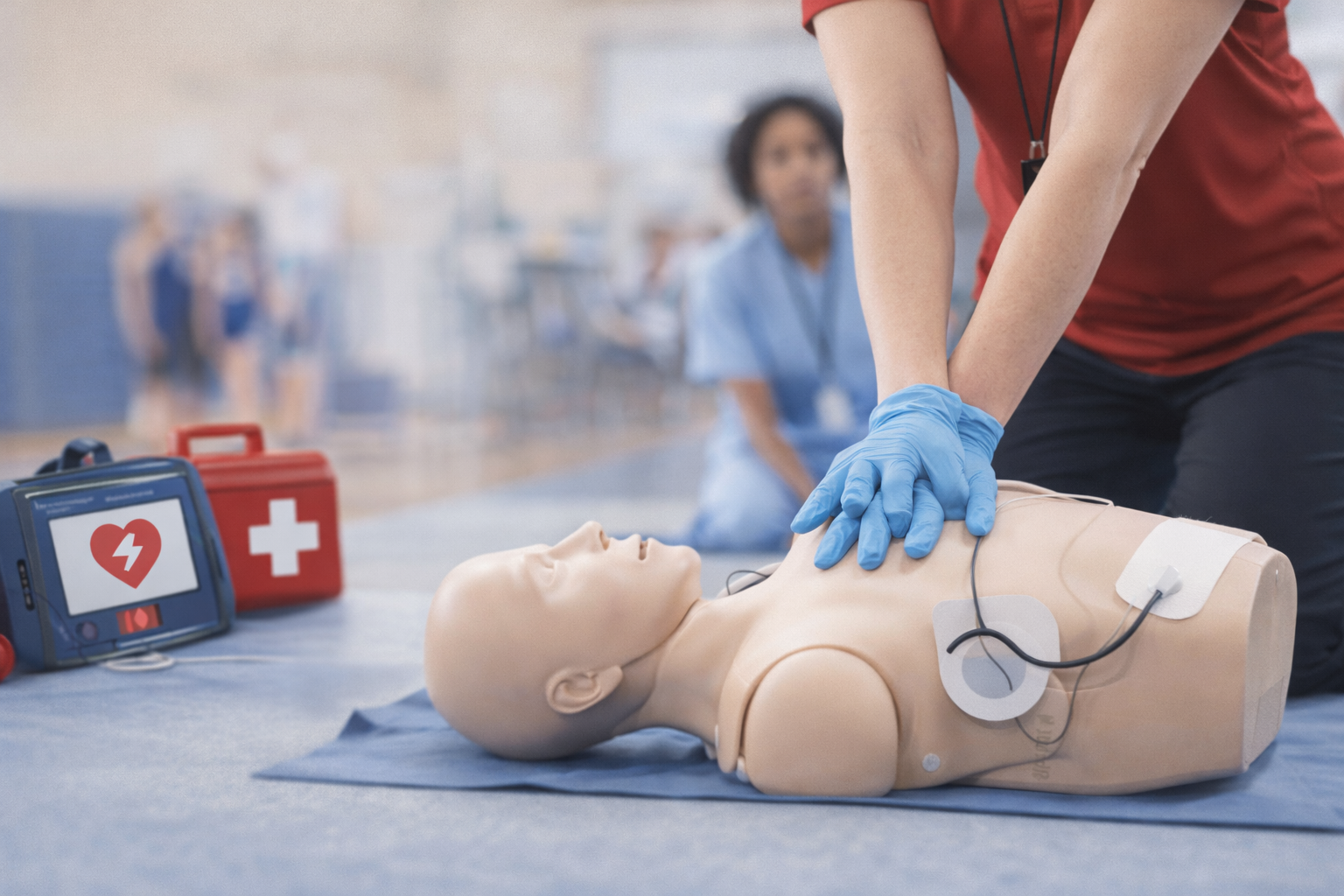
CPR is simple, effective, and designed for everyday people. You don’t need medical training, AEDs are easy to use, and immediate action can dramatically improve survival during cardiac arrest.
When it comes to CPR, misinformation can cause hesitation, and hesitation costs precious seconds. Clearing up common myths helps people act confidently and decisively when an emergency happens.
Myth #1: You Need Medical Training to Perform CPR
Truth: CPR is designed for everyone, not just healthcare professionals. Courses like Heartsaver CPR & AED are specifically built for teachers, parents, coaches, and community members with no medical background.
These classes focus on recognition, compressions, and AED use so anyone can step in and help when it matters.
Myth #2: Mouth-to-Mouth Is Always Required
Truth: Not always. For adults who suddenly collapse, Hands-Only CPR (chest compressions only) is often recommended until help arrives.
Hands-Only CPR keeps blood circulating to the brain and heart and is covered in both Heartsaver CPR and Basic Life Support (BLS) courses.
Myth #3: You Might Hurt Someone If You Do CPR Incorrectly
Truth: Effective CPR requires strong compressions. Rib fractures can happen, but they are far less serious than cardiac arrest.
Doing something is always better than doing nothing. CPR training emphasizes proper technique so you can act confidently without fear.
Myth #4: AEDs Are Complicated or Dangerous
Truth: AEDs are designed for the general public. They provide clear voice prompts and will only deliver a shock if it’s medically appropriate.
CPR training teaches how to use an AED safely and correctly, and AED use is included in CPR & First Aid Certification Courses and onsite workplace training.
Myth #5: CPR Doesn’t Really Work
Truth: Immediate CPR can double or even triple survival rates during cardiac arrest. Every minute without CPR reduces the chance of survival by roughly 7–10 percent.
Early action by a trained bystander often makes the difference before emergency responders arrive.
The Bottom Line
CPR doesn’t require perfection. It requires action. Learning CPR gives you the ability to help a coworker, student, athlete, family member, or stranger when seconds count.
Training empowers everyday people to save lives.
Next Steps
Bust the myths and get certified today.
Explore local classes, renewals, and group training at GEAR UP with CPR.
You can also find convenient options near you on our
CPR Training Locations page.
Frequently Asked Questions