How to Prepare for Your CPR Skills Test
TLDR
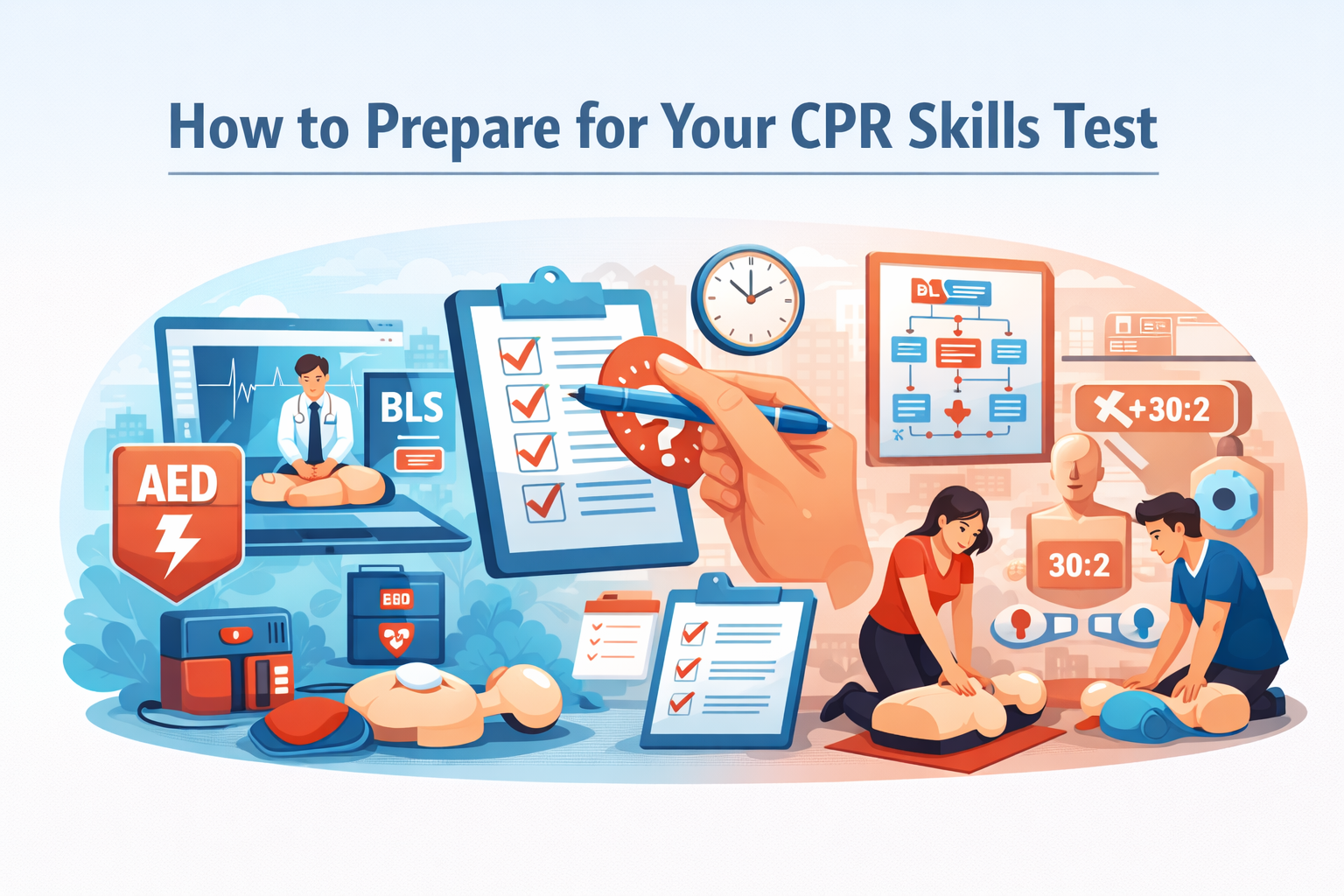
Preparing for your CPR skills test is straightforward when you review your course materials, practice the CPR sequence, understand key ratios, and stay calm. Whether you’re completing HeartCode or an in-person class, preparation builds confidence and leads to success.
Whether you’re completing a HeartCode blended-learning course or attending a full in-person CPR class, the CPR skills test is your opportunity to demonstrate that you can perform life-saving techniques correctly and confidently. With a little preparation, most students pass easily on their first attempt.
1. Review Your Course Material
Before your skills evaluation, revisit the core steps covered in your training. If you’re enrolled in HeartCode BLS, HeartCode ACLS, or HeartCode PALS, take time to carefully complete the online modules.
These courses reinforce CPR algorithms, AED use, and emergency response flow that you’ll demonstrate during your hands-on test.
If you’re taking a provider-level course, reviewing the foundations of Basic Life Support (BLS) is especially helpful.
2. Practice the CPR Sequence
You should feel comfortable performing the full CPR sequence from start to finish, including:
Scene safety and responsiveness checks
High-quality chest compressions at the correct rate and depth
Proper hand placement
AED setup and shock delivery
Even practicing at home on a pillow or cushion can help reinforce rhythm and positioning before test day.
3. Know the Ratios and Procedures
Understanding compression-to-breath ratios is essential. For adults, this is typically 30 compressions to 2 breaths. For infants and children, ratios may vary depending on whether it’s a single-rescuer or two-rescuer response.
These details are reviewed in both BLS certification and Heartsaver CPR & First Aid courses, so refreshing them ahead of time helps your skills test feel automatic rather than stressful.
4. Manage Your Nerves on Test Day
The CPR skills test is not about perfection. Instructors are looking for consistency, awareness, and correct technique. Take your time, listen carefully, and focus on completing each step in order.
If you make a small mistake, don’t panic. Instructors are there to coach and guide you so you can demonstrate safe, effective CPR.
5. Renew and Refresh Regularly
CPR skills can fade without practice. Certification is valid for two years, but many professionals choose to refresh earlier through a BLS Renewal or Heartsaver CPR & First Aid course.
For workplaces and teams, refresher sessions are often scheduled through Onsite CPR Training to keep staff confident and compliant.
Next Steps
Ready to schedule your CPR skills evaluation or renewal?
Explore flexible certification options at GEAR UP with CPR.
You can also find upcoming classes near you by visiting our CPR Training Locations page.
Frequently Asked Questions